
Every so often in tech history, a long-dormant grudge ignites into a full-scale market war. We’re watching one unfold right now. NVIDIA and Apple — two giants who turned their backs on each other two decades ago — are facing off again, this time over who gets to define the AI PC on your desk.
Prologue: The Middle Finger and the Allergy
In 2012, at a lecture hall in Helsinki, Linus Torvalds — the creator of Linux — raised his middle finger to every camera in the room and declared:

“NVIDIA is the single worst company we have ever dealt with. So, NVIDIA, f** you.*”
Closed-source drivers. A systematic disregard for the open-source ecosystem. The relationship between NVIDIA and the Linux community had hit rock bottom.
A few years earlier, Steve Jobs had already written NVIDIA off entirely. Following the infamous Bumpgate scandal — a GPU defect that caused widespread MacBook failures and an embarrassing recall — Jobs soured on the company for good. The tech world joked that Apple had an “NVIDIA allergy,” and in 2019, Apple made it official by dropping NVIDIA driver support from macOS altogether.
Arrogant. Hostile to open standards. Brilliant, but impossible to work with.
Yet by 2026, that same giant had consumed the AI infrastructure market whole — H100s, Blackwell chips — and is now trading blows for the title of world’s most valuable company. And now, right at this moment, the old rivals have declared a new war: on the AI PC sitting on your desk.
The Battlefield: How the Mac mini Became the Unlikely King of Local AI
As NVIDIA tightened its grip on data center AI chips, prices soared beyond reach for individual developers and researchers who just wanted to run large language models locally. To run a model with tens of billions of parameters on an NVIDIA GPU, you’d need a machine with massive VRAM — meaning tens of thousands of dollars in hardware.
Into that void stepped an unlikely hero: Apple’s Mac mini.
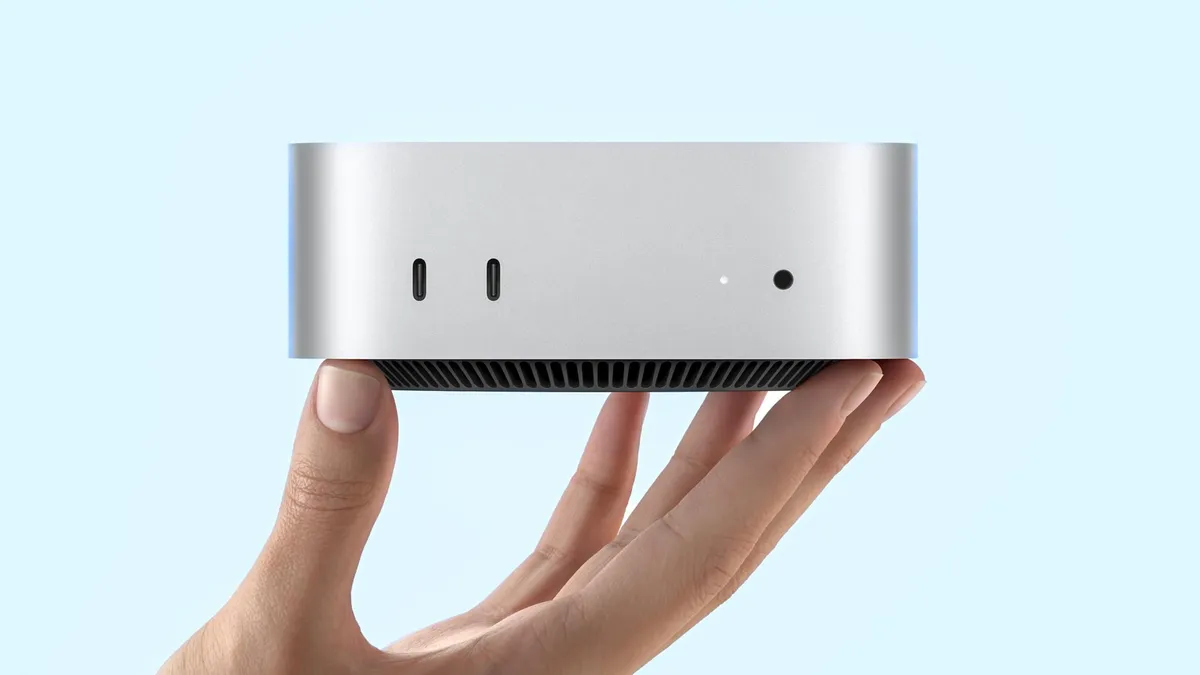
The secret was Apple Silicon’s Unified Memory Architecture. Because the CPU and GPU share a single, large memory pool, a Mac mini loaded with RAM can quietly and efficiently run 30B–70B parameter local AI models — right on your desk, with near-silent operation and minimal power draw.
It earned a nickname that stuck: the best AI workstation for developers on a budget.
Technical Note for Developers: Why VRAM Is Everything
Why does VRAM dominate local AI performance?
When you run an LLM, the model’s weights must fit entirely in GPU memory (VRAM). Even a 70B parameter model quantized to 4-bit requires roughly 35–40GB. An RTX 4090 has 24GB of VRAM. It doesn’t matter if your system has 128GB of RAM — if VRAM runs out, the model either fails to load or gets offloaded to the CPU, dropping inference speed by 10x or more.
Why is Unified Memory different?
Apple Silicon places the CPU, GPU, and NPU on a single package, sharing one memory pool. On a Mac Studio M3 Ultra (192GB), all 192GB is available for AI inference. Memory bandwidth hits ~800GB/s — compared to ~100GB/s for DDR5 — which matters enormously for model throughput.
NVIDIA’s Countermove: “Copy the Weapon That Beat Us”
Jensen Huang wasn’t about to let this stand.
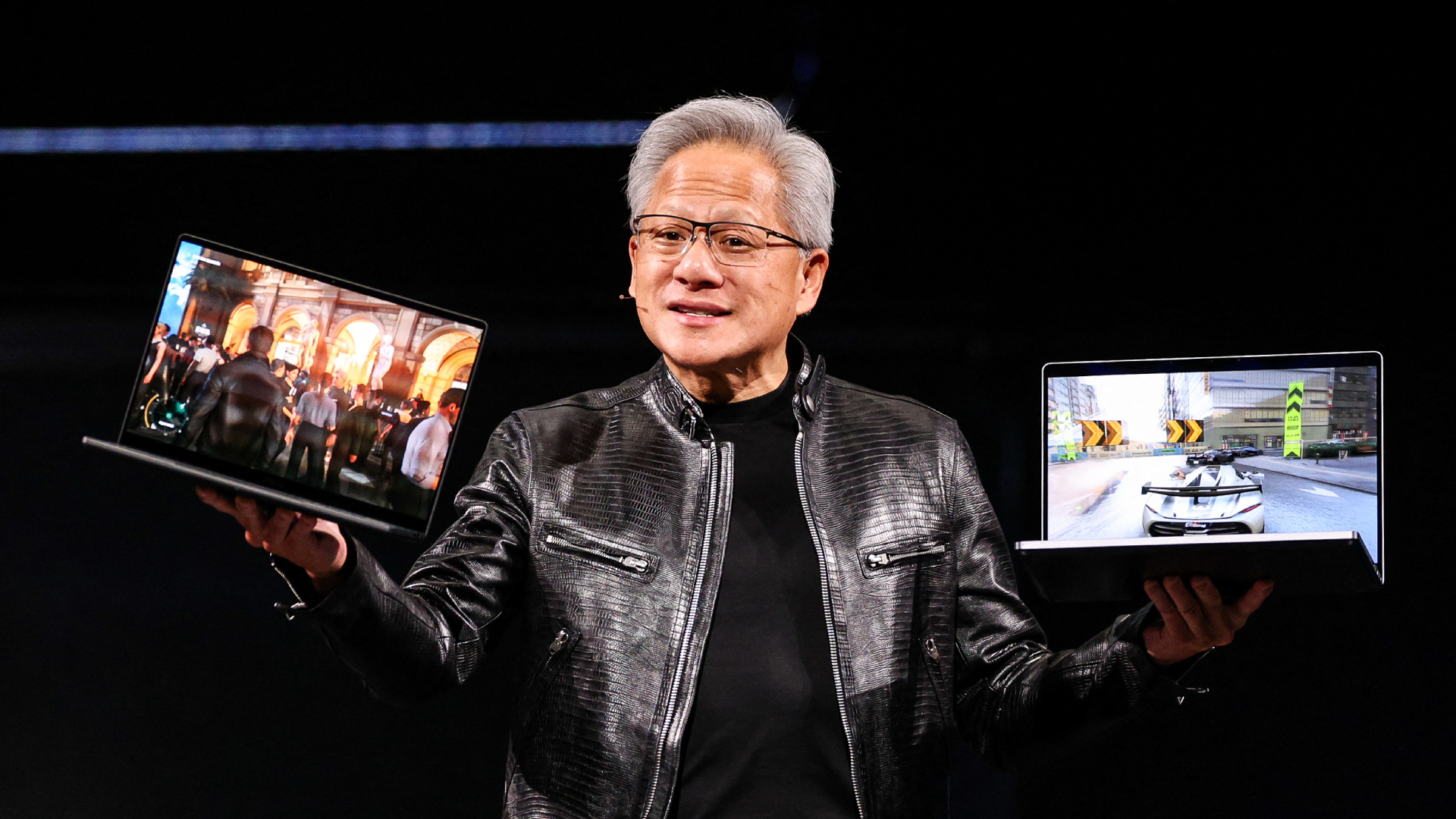
At Computex 2026, NVIDIA partnered with Microsoft to announce RTX Spark — a PC processor of their own design. Take a look at the spec sheet and the message is impossible to miss:
| Spec | RTX Spark |
|---|---|
| CPU | Arm-based, 20-core |
| GPU | Blackwell architecture |
| Memory | Up to 128GB Unified Memory (LPDDR5X) |
| Form factor | SoC (System-on-Chip) |
Sound familiar?
NVIDIA has stepped out of the discrete GPU box entirely, and benchmarked — almost point for point — the exact architecture Apple used to dominate local AI: the unified memory SoC. Pair that with Blackwell GPU performance and the CUDA ecosystem, and Windows users finally get a machine that can match the Mac mini for local AI, without hitting a VRAM wall.
This is a direct shot at Apple. There’s no other way to read it.
Epilogue: The Hardware Architects Face Off — Round 2
The timing couldn’t be more pointed. As NVIDIA made its move, Apple completed a generational leadership change of its own. Succeeding Tim Cook as Apple’s new CEO is John Ternus, formerly SVP of Hardware Engineering.
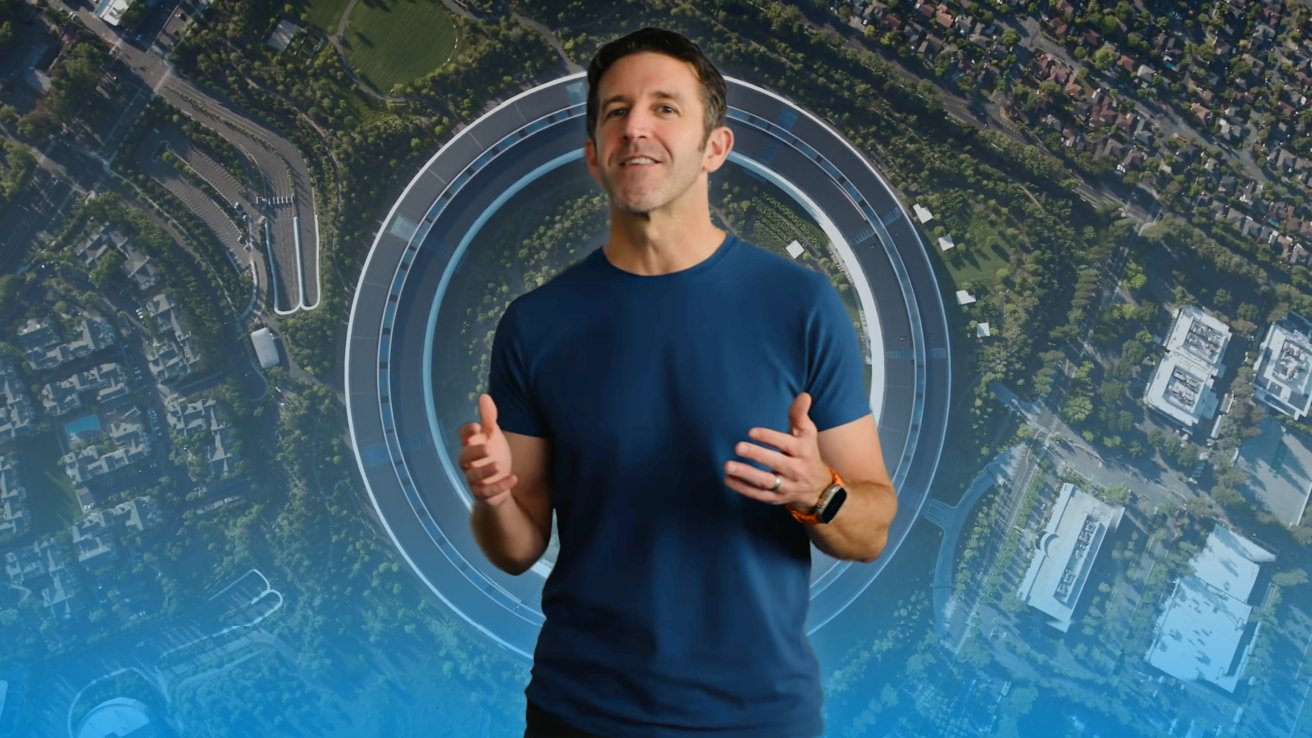
Ternus is the architect behind the most consequential hardware transition in Apple’s recent history: the shift from Intel to Apple Silicon. Apple has put the engineer who knows the chip’s DNA better than anyone into the top chair — a clear signal that they intend to fight.
The two sides have their cases ready.
- NVIDIA: “You had fun with your unified memory trick. Wait until you see what real GPU silicon does when it gets the same architecture.”
- Apple: “We’ve been co-designing chip and OS from day one. No one copies their way to that kind of integration. We’ll show you again.”
The grudge that started in Steve Jobs’ era has re-ignited twenty years later — now as a battle for the future of AI computing on your desk.
Will NVIDIA’s raw Blackwell muscle and the CUDA software moat carry the day? Or will Apple’s years of vertical hardware-software integration prove too deep to displace?
This is one fight worth watching closely.

